





.png)




How Non-Doctors Successfully Run Private Hospitals In Malaysia


KUALA LUMPUR, August 10 — While government hospitals are primarily run by physicians, the private sector shows how professionals who aren’t medical doctors can successfully manage hospitals as chief executive officers (CEOs).
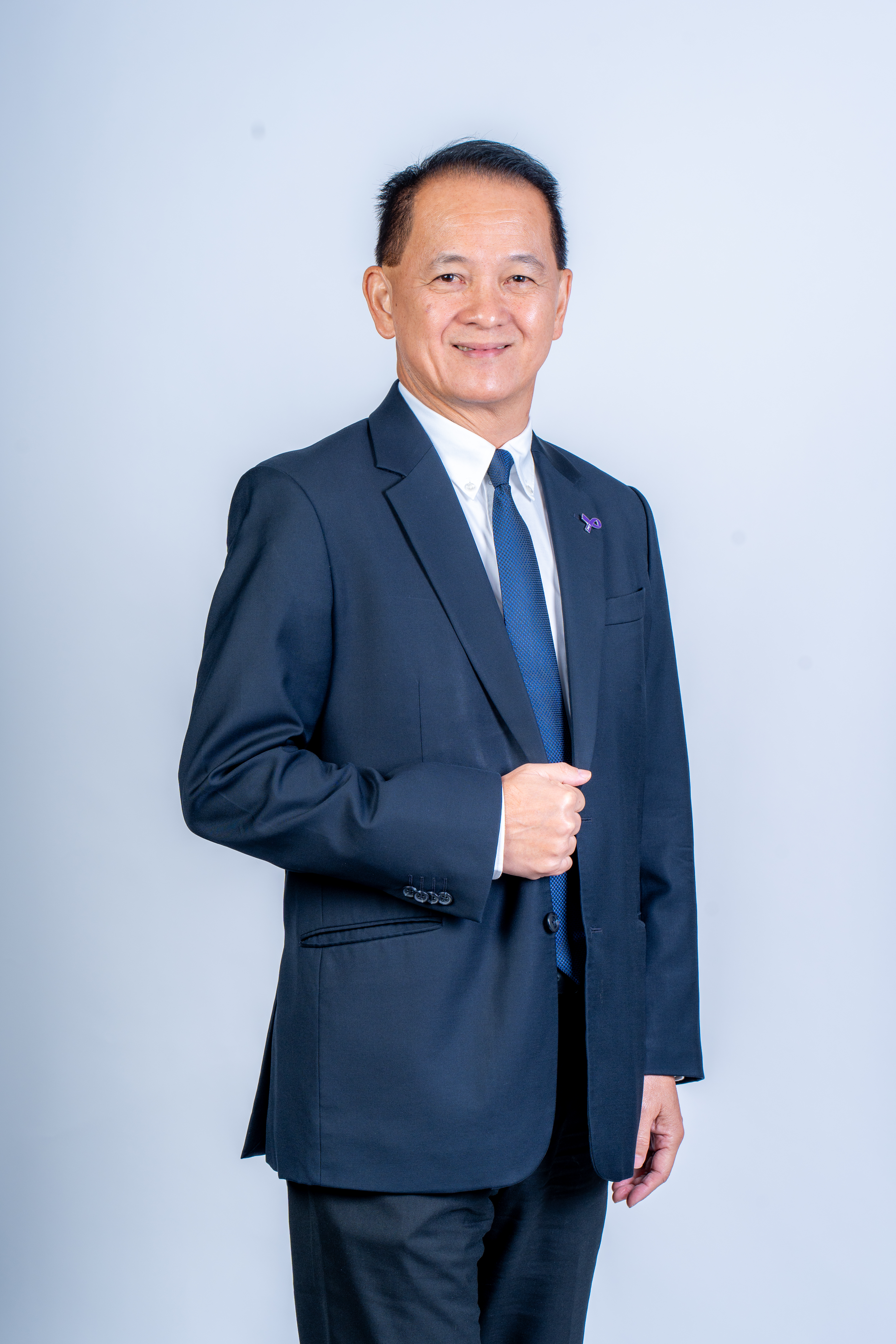
Bryan Lin – who serves as regional CEO of Asia OneHealthcare and CEO of Subang Jaya Medical Centre (SJMC) and Ara Damansara Medical Centre (ADMC) – has a degree in business administration, management and operations, as well as a Master’s in health care administration/management.
Patient Journey Begins The Minute They Leave Home
Bryan Lin began his career as a junior statistician in a hospital in Los Angeles in the United States in 1989, before coming home as a financial analyst at SJMC in 1992, after the hospital’s founding in 1985. Lin remained in the hospital industry in Malaysia and pioneered several hospitals in other companies, before returning to SJMC three decades later in 2022.
As CEO of not just SJMC and ADMC under the Asia OneHealthcare group, of which he also serves as regional CEO, Lin said he puts himself in a patient’s shoes and looks at their journey from the moment they leave their house to go to the hospital.
This involves looking at hospital signboards to ensure they’re visible at night (“if an alphabet is missing, I get upset,” says Lin), parking (“if a patient cannot find parking, they won’t use the hospital”), ease of finding lifts in the parking area, and even providing concierge services outside SJMC’s entrance to help guide people to where they want to go.
When CodeBlue visited SJMC for the interview with Lin last Monday, a concierge staff member approached the team and asked about our destination.
Not only does the registration process need to be smooth, said Lin, but the payment process too after receiving hospital services.
The CEO and senior management even gave up their parking spots in SJMC for patients a few years ago and parked off site because the hospital’s parking lot was full then.
“Patient journey is very important to me. So that’s why I say, if my toilet is dirty, that means I’ve not done my job.”
Besides visiting wards, Lin frequents areas with high patient touch points, using the stairs to get around instead of lifts because patients “need it more than me”.
The SJMC CEO even reads Google reviews of the hospital that is currently rated 4.5 out of five stars, including complaints about parking and how people tend to get lost in the hospital. SJMC has received various international awards, including one from the World Stroke Organization (WSO) Angels Awards 2026 in stroke care.
Lin explained that medical equipment purchases must take into account the return on investment and payback period, but stressed that patient needs are prioritised in making such decisions.
SJMC, for example, purchased a digital PET scanner a few years ago that was safer for patients with lower radiation dosage. The hospital also invested in tomotherapy with Synchrony, an advanced technology that allows lung cancer patients to breathe normally without needing to hold their breath during radiation.
“So it actually expedites the treatment time and patients don’t have to suffer too much.”
When asked why he decided to purchase the expensive technology, Lin said the decision was motivated by patients’ clinical needs. “It’s great for patients; that’s priority number one. Two, I can treat the patient faster, I can put in more throughput, therefore I can get my returns faster.”
“So it’s a balance of the non-financials and financials. But for me, I always put the non-financial first because if you look after the patient, everything else will follow,” Lin told CodeBlue.
He explained that clinicians always have a say in management’s decisions in buying new medical equipment. “So with the close partnership that we have, there’s actually very little conflict in running this hospital.”
SJMC also has a “Speak Up” programme that patients can use to contact Lin and the hospital’s medical director directly if they’re not comfortable with their treatment plans or any clinical matters.
Lin touted an inverted pyramid version of his company’s organisation chart, in which the CEO is at the bottom, whereas shareholders are the CEO’s enablers.
“The CEO is an enabler. The CEO finds resources. The boss isn’t the CEO. The boss is actually the patient and the mak cik, pak cik, auntie who brings the patient over. That’s my boss,” said Lin.
“After them are my concierge, housekeeper, radiographers, MLT (medical laboratory technologist), nurses, office assistant. They’re my boss. Then below that is their supervisor. And below that is my assistant manager or manager, and then my directors and division heads. Then only it’s me. So that’s the culture I set for every organisation I work.”
This inverted pyramid is Lin’s “north star”, who described doctors as his partners and co-labourers. “I can’t do without them, they can’t do without me. We have a symbiotic relationship. So based on that itself, I know how to make my decision. If I want to buy a capex, does it benefit the patient or not? If it doesn’t, forget it. Does it help my staff to work better or not? If yes, it’s worth investing. So that’s how I would arrive at what I need to buy or what I need to do.”
SJMC, which is over four decades’ old, has a workforce of around 1,600, comprising about 270 resident and visiting consultants, while a third are nurses.
Lin believes in reducing health care costs by moving care away from the hospital. SJMC has a Connected Care programme, in which doctors and nurses manning the 24/7 command centre in the hospital can remotely monitor patients at home, especially those who receive an outpatient guarantee letter (GL) from their insurer.
“For us, we’re a bit uncomfortable, let’s say for dengue or certain illnesses. So what we do is, we give this device free for the patient to take home. You monitor yourself; you’re connected to our command centre. From the command centre, we can see if your vital signs are deteriorating or if you’re not getting well,” said Lin. The device monitors one’s blood pressure, temperature, and SpO2.
He pointed out that dengue fever cases can deteriorate, upon which they will be told to immediately seek medical treatment or return to the hospital. “So rather than sending the patient home without anything, there’s this so-called monitoring.”
Senior citizens can also be monitored remotely under Connected Care, as they’re given medical devices by the hospital that can be worn when they have a fever, for example. SJMC doesn’t make use of users’ wearables because they’re not medical grade devices.
“These are some of the examples that we’re doing to try to Uberise health care services,” said Lin.
Staff welfare and remuneration are very important to Lin. SJMC conducts lots of staff engagement, including surveys to identify issues and employee-of-the-month programmes, besides training and upskilling for career development.
“People need to make a living to sustain their lifestyle. Beyond that, there are other intangible needs. We need to also nurture their self-esteem, give them compliments, and give credit when credit is due,” said Lin.
“Beyond money, we cannot programme them to fail. Wherever they are, we must make sure they excel.”
When asked if an MD or non-doctor was better suited to run a hospital, Lin said qualifications in hospital management or administration gave one a more balanced approach in managing the struggles of a hospital and meeting financial targets.
“I think the hospital manager has got to be a professional person who can balance these two and also integrate clinical excellence with business execution. They can be a doctor or non-doctor.”
To read the full article by CodeBlue visit here