





.png)




Mind, Body, Years: A Lifelong Health Journey


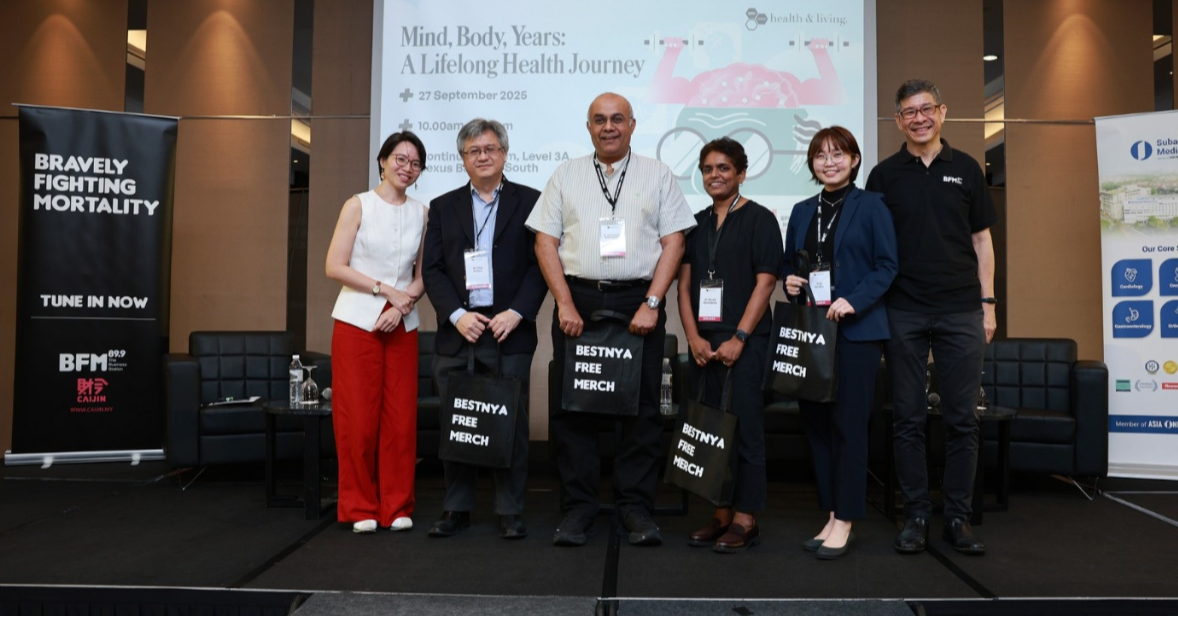
Growing older doesn't have to mean giving up the things that bring joy to life. At the Mind, Body, Years: A Lifelong Health Journey public forum, specialists from Subang Jaya Medical Centre (SJMC) challenged common misconceptions about ageing and encouraged Malaysians to view growing older as a journey that can be navigated with awareness, early intervention and the right support.
The multidisciplinary panel featured:
- Dr Chin Ai-Vyrn, Consultant Geriatrician
- Dr Vickneswaran Mathaneswaran, Consultant Neurosurgeon
- Dr Revadi Govindaraju, Consultant Ear, Nose and Throat Surgeon
- Ms Ying Sii Gen, Occupational Therapist
Specialists from SJMC who shared practical insights into maintaining cognitive health, mobility, hearing, balance and independence throughout life.
Ageing is not the same as decline
One of society's biggest misconceptions is that ageing automatically means deterioration.
Dr Chin encourages the public to shift their mindset about growing older. "A lot of people misunderstand ageing. We think that we start ageing when we get older. But actually, we start ageing the moment we are born."
He explained that while the body naturally changes over time, ageing is not solely about loss. "When we talk about ageing, we talk about different stages in our life, and it doesn't have to be negative."
Instead of focusing only on physical decline, he highlighted how older adults often gain wisdom, creativity and life experience. More importantly, changes associated with healthy ageing should not significantly interfere with daily function.
"If these changes affect your ability to carry out daily activities," he explained, "it's not simply ageing—it may be due to an underlying illness that deserves medical attention."
Not every memory problem is dementia
Memory lapses are one of the most common fears associated with ageing, but the panel reassured audiences that occasional forgetfulness is often a normal part of life.
Dr Chin explained that everyday distractions such as forgetting why you entered a room or accidentally brushing your teeth twice because your mind was elsewhere, are usually problems with attention rather than memory itself.
However, progressive changes that become more frequent or interfere with familiar tasks should never be ignored. "If it's something new, progressive, and it’s getting worse, then you should possibly have a chat with somebody."
Dr Vickneswaran added that dementia is not the only explanation for cognitive decline. Certain brain conditions, including slow-growing brain tumours and chronic subdural haematomas can produce similar symptoms but are often treatable through surgery.
Don't dismiss symptoms as 'Sakit Orang Tua’
Another recurring message throughout the forum was the danger of dismissing symptoms simply because someone is getting older.
Dr Revadi stressed that dizziness should never be considered normal. "If somebody says, 'I'm dizzy,' it needs to be investigated."
She explained that dizziness may stem from dehydration, low blood sugar, anaemia or disorders affecting the inner ear balance system. Some conditions, such as benign positional vertigo, can even be treated with simple repositioning manoeuvres when properly diagnosed.
Similarly, hearing loss and vision changes should be assessed early rather than accepted as inevitable. Family members should watch for subtle signs such as increasing television volume, withdrawing from conversations or struggling to follow discussions, and encourage their loved ones to undergo an ENT assessment.
Surgery isn't determined by age alone
Many older adults hesitate to undergo surgery because they believe they are "too old." Dr Vickneswaran challenged this belief, explaining that modern surgical decisions are based far more on overall health and expected quality of life than chronological age.
"I cannot deny you surgery just because you are a number." Instead, surgeons carefully assess whether the operation is likely to restore function, improve quality of life and whether the patient is fit enough to recover safely.
Dr Revadi echoed this approach, explaining that treatment decisions should always consider what matters most to the patient. Whether surgery is recommended depends not only on the medical condition, but also on the individual's lifestyle, goals and expected benefits.
Independence is the goal
Ms Ying reminded audiences that maintaining independence is often more important than complete recovery.
She noted that many older adults initially resist walking aids because they associate them with weakness. Instead, families should involve them in choosing and accepting assistive devices rather than making decisions on their behalf.
Following surgery or illness, rehabilitation should also begin early. Patients are encouraged to start moving as soon as medically appropriate, progressing gradually from bed exercises to standing, walking and eventually returning to everyday activities.
Caring for someone with dementia starts with understanding
Dr Chin reminded families that people living with dementia are not deliberately being difficult. "The patient is not being difficult. There is a disease process that is causing this change."
He encouraged caregivers to simplify communication by offering clear choices rather than open-ended questions, while recognising that repeated questions often reflect underlying concerns rather than forgetfulness alone.
Above all, he emphasised empathy and patience.
Growing older requires preparation As Malaysia moves towards becoming a super-aged society, the panel agreed that healthy ageing requires preparation from individuals, families and healthcare systems alike.
From recognising early warning signs and seeking timely medical advice to embracing rehabilitation, assistive technologies and multidisciplinary care, ageing well is not about avoiding change—it is about adapting to it.
While ageing is inevitable, unnecessary disability is not. With the right mindset, proactive healthcare and support, people can continue to live meaningful, active and independent lives throughout their later years.
Source: BFM