





.png)




Is It Aging or Alzheimer’s? Expert Insights on Early Detection and New Therapies in Malaysia



When memory begins to falter, many people dismiss it as simply “getting older”, overlooking what may be the earliest warning sign of Alzheimer’s disease. It causes no physical pain or obvious discomfort—yet it silently erodes memory and thinking, gradually blurring even one’s sense of self.
Although there is still no cure, advances in early detection and emerging treatments are offering new hope. The medical community is increasingly focused on slowing disease progression, helping patients maintain independence for longer.
Dr Chin Ai-Vyrn, Consultant Geriatrician and Physician at Subang Jaya Medical Centre, explains that occasional forgetfulness or lapses in attention can be part of normal ageing. However, persistent memory loss that interferes with daily life may signal dementia—particularly Alzheimer’s disease.
“Too often, people assume memory loss is a natural part of ageing, and this delays patients from receiving timely intervention,” he says. He adds that the terms “dementia” and “Alzheimer’s disease” are often used interchangeably, but they are not the same.
Dementia is a general term used when cognitive decline—affecting memory, thinking, and behaviour—becomes severe enough to disrupt daily life. Alzheimer’s disease, on the other hand, is the most common cause of dementia. It is a neurodegenerative condition that progressively damages cognitive function and eventually leads to dementia.
“The impact of Alzheimer’s goes far beyond memory loss. It gradually erodes a person’s identity and their connection with others, leaving patients unable to recognise loved ones or care for themselves. Perhaps the most heartbreaking reality is this: the person is still physically present, but the familiar individual we once knew slowly disappears. This disease affects not only the patient, but the entire family.”
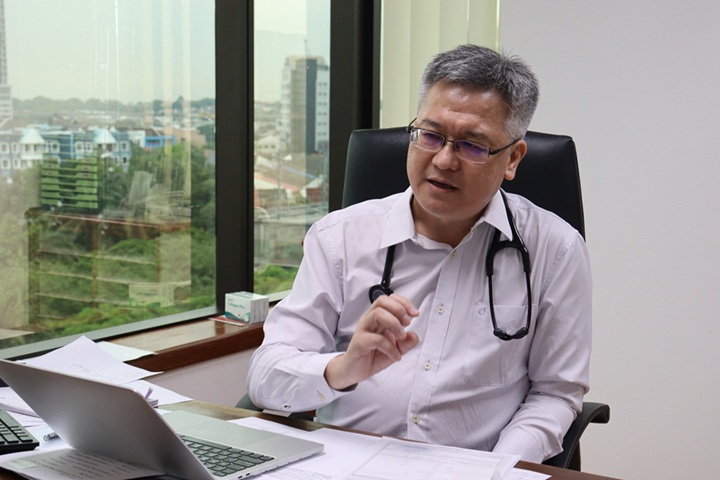
Dr Chin Ai-Vyrn
Risk increases sharply with age
Dr Chin explains that as Alzheimer’s disease progresses, the brain becomes increasingly damaged due to the accumulation of abnormal proteins. This leads to the gradual death of brain cells and a steady decline in memory and cognitive function.
Risk factors include smoking, alcohol consumption, physical inactivity, social isolation, lower levels of education, lack of cognitive stimulation, hearing or vision impairment, and head injuries. However, the most significant risk factor remains age.
While data across countries may vary, the overall trend is clear: risk rises significantly with advancing age. Among those aged 65 to 69, around 1 in 50 people are affected by dementia. For those aged 80 and above, the figure rises to approximately 1 in 3. After the age of 65, the risk of Alzheimer’s disease doubles every five years.
“Globally, around 55 million people are living with Alzheimer’s disease or other forms of dementia, and this number is expected to reach 153 million by 2050. In Malaysia, an estimated 200,000 to 260,000 people are currently affected, representing about 8.5% to 11% of the elderly population.
“However, this may only be the tip of the iceberg, as about 70% of cases remain undiagnosed. By 2050, the number in Malaysia is projected to rise to between 630,000 and 820,000.”
Recognising early warning signs
More concerning than the disease itself is the widespread misunderstanding surrounding it. Dr Chin notes that studies show not only the public, but even some healthcare professionals, may mistakenly regard memory decline as normal ageing.
In reality, Alzheimer’s disease often first affects the parts of the brain responsible for memory. Early warning signs tend to appear in everyday situations—such as increasingly frequent and severe forgetfulness, difficulty finding the right words during conversation, or frequently misplacing items.
Personality changes may also occur, including becoming withdrawn or lacking motivation. The key is not whether someone forgets occasionally, but whether the symptoms are persistent and progressively worsening.
“Importantly, changes in the brain associated with Alzheimer’s can begin more than a decade before symptoms appear. By the time signs become obvious, the disease may already be well underway. This is why it is crucial to seek assessment from a doctor experienced in dementia as early as possible.”

The importance of early diagnosis and treatment
In the past, Alzheimer’s diagnosis relied largely on clinical assessment—based on medical history, physical examination, and neuropsychological testing.
In recent years, there has been a shift towards biological diagnosis. Encouragingly, a new blood test for the biomarker p-tau217 now offers over 90% accuracy, significantly improving early detection and screening.
When it comes to treatment, Dr Chin emphasises that Alzheimer’s disease is not “untreatable”. While a cure remains elusive, a range of interventions can help manage symptoms, slow progression, and improve quality of life.
Beyond conventional symptomatic treatments, a breakthrough has emerged in the form of anti-amyloid therapy. This approach works by activating the immune system to remove abnormal amyloid proteins in the brain, thereby slowing disease progression. It has now been approved for use in Malaysia, providing patients with an additional treatment option.
However, he cautions that these therapies do not cure the disease—they aim to slow it down—and are most effective in the early stages. This once again underscores the importance of early diagnosis.
Protecting brain health starts now
In addition to medical treatment, lifestyle plays a crucial role. Regular exercise, a balanced diet, good sleep, social engagement, and continuous mental stimulation all contribute to better brain health and may reduce the risk of Alzheimer’s disease.
Managing chronic conditions such as hypertension and diabetes, as well as addressing hearing or vision problems, is equally important.
“These are not measures to take only in old age—they should start now,” he stresses.

Is Alzheimer’s really that far from us?
Dr Chin points to well-known figures such as former US President Ronald Reagan and former UK Prime Minister Margaret Thatcher—often referred to as the “Iron Lady”—both of whom were affected by dementia despite once standing at the pinnacle of power. Their stories serve as a reminder that the disease does not discriminate.
He calls on society to take Alzheimer’s disease seriously—from raising public awareness and improving access to healthcare, to strengthening caregiver support and developing more comprehensive, inclusive policies.
At the same time, he urges individuals to seek medical advice early if they notice changes in memory or thinking.
He also offers a reminder to caregivers: take the time to learn about dementia and what to expect as it progresses, make use of available support resources, and ensure that you get adequate rest. Only by caring for yourself can you continue to care for your loved one.
Source: Sin Chew Daily